Similar visual goals, different ways to achieve them.
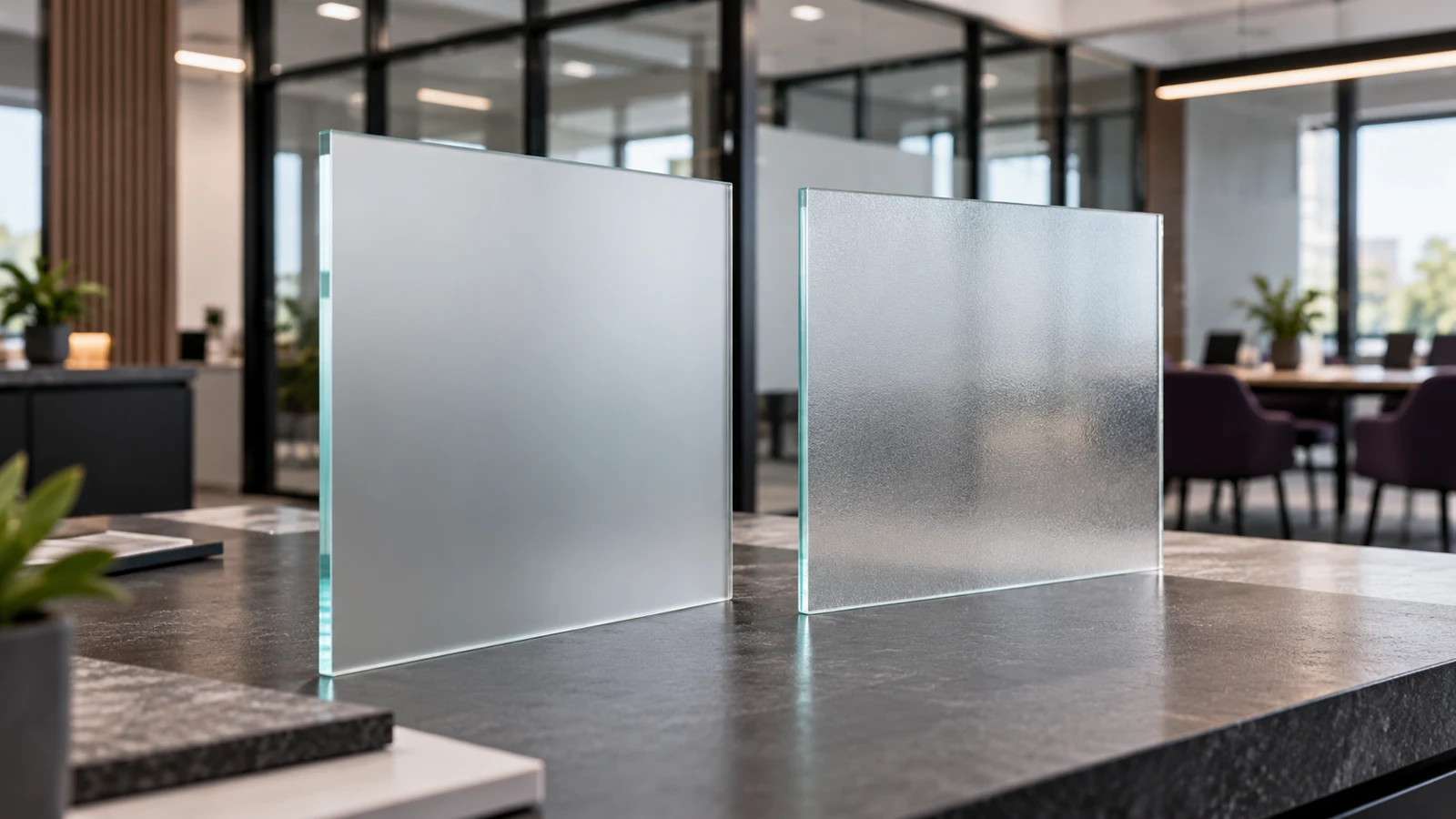
Frosted window film and etched glass can both soften a view through glazing while allowing a sense of light and openness. They are different products, however. Film is applied to a suitable glass surface. Etching changes the surface of the glass itself. That difference matters when you are adapting an existing office, specifying new partitions or planning how branding may change later.
Begin by defining the actual problem. Do you need to reduce a direct view into a treatment room, add a company logo to a meeting room or make a glazed door more noticeable? These are related but distinct requirements. A decorative pattern can look attractive without providing the level of privacy needed, and an opaque-looking sample can behave differently when someone stands close to the glass.
Compare at a glance.
On a smaller screen, scroll across to compare all options.
| Factor | Frosted window film | Etched glass |
|---|---|---|
| How it is made | Applied decorative layer | Treatment of the glass surface |
| Existing glazing | May be applied if glass is suitable | Often a glazing replacement discussion |
| Future branding | Can be considered for replacement graphics | Permanent finish is less adaptable |
| Patterns and logos | Flexible applied graphic options | Discuss with specialist glass supplier |
| Privacy | Depends on product, coverage and conditions | Also depends on finish and conditions |
| Large areas | Discuss sheet width and visible joins | Discuss pane sizes and glazing joints |
| Installation | Preparation and application to glass | Glass fabrication and fitting process |
| Care | Follow film-specific cleaning guidance | Follow glass-treatment care guidance |
| Best starting point | Adaptable branding in an existing space | Lasting finish within a new glazing scheme |
Frosted film: adaptable decoration for suitable existing glazing.
Decorative film can create a frosted or etched-style appearance without replacing the pane solely to achieve that effect. 3M FASARA glass finishes include patterned options designed to reproduce aspects of textured or etched glass appearance. The product range illustrates the design possibilities; the exact film and application should be chosen for your glazing.
Film is particularly worth discussing in an occupied office, a leased shop or a room where names and branding may change. Logos, bands and patterns can be incorporated into a considered layout. The ability to alter an applied graphic can be useful, although removal and replacement still require time, suitable methods and attention to the underlying surface.
The limitations include the suitability and condition of the glass, visible joins on large areas, exposed edges and the care needed during cleaning. Film should not be promised to conceal every scratch or defect. Some glazing has coatings or other characteristics that affect compatibility. Tell us what you know about the glass and arrange a check where the specification is uncertain.
Etched glass: a finish built into the glazing choice.
Etched glass has a treated surface rather than an applied decorative layer. Acid-etched products are one example; Pilkington Optifloat Opal illustrates a manufactured decorative glass option. The exact glass construction, processing and installation should be specified by the glazing supplier for the intended application.
This route can suit a new fit-out where the glazing itself is being selected and a lasting decorative finish is wanted. It avoids relying on an applied film edge for the visual effect. That can be appealing in an architectural scheme where the glass is part of the permanent material palette and future graphic changes are unlikely.
The trade-off is reduced flexibility when the appearance or branding needs to change. Altering the treated finish is not equivalent to replacing a vinyl graphic. If new panes are required, the project involves glazing measurements, fabrication and installation rather than only a signage visit. Discuss the entire construction and any safety requirements with the glazing specialist.
Test privacy in the room, not just on a swatch.
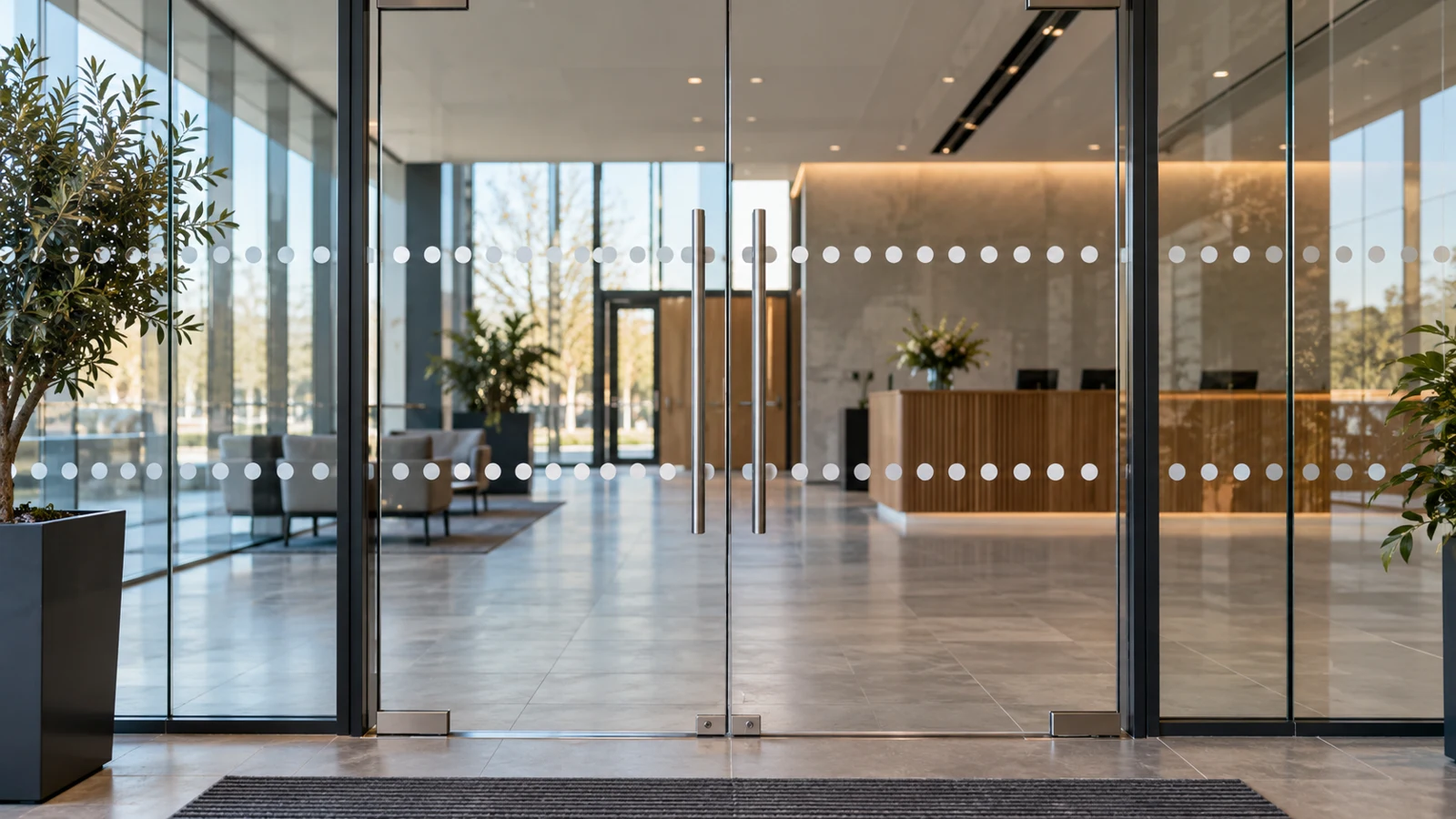
Privacy is not a simple yes-or-no property shared by every frosted finish. The pattern, coverage, light on either side and the distance of people or objects from the glass affect what can be perceived. A narrow decorative band may interrupt a direct sightline while leaving views above and below it. That may be suitable for a meeting room but insufficient for a more private activity.
For a useful assessment, identify the positions that matter: seated at a desk, standing at a reception counter or passing through a corridor. Consider screens, paperwork and people as separate things to protect from view. Ask to review a sample under representative conditions, including evening lighting if the room is used after dark.
If genuine visual confidentiality is essential, say so explicitly and be prepared to consider a different coverage or room arrangement. Neither a fashionable pattern nor a general product name should be accepted as proof that sensitive information cannot be seen. A practical test with the proposed layout is more useful than relying on a photograph from another building.
Use the glass as part of the interior design.
Film can carry repeated motifs, a restrained logo or a pattern coordinated with the surrounding brand. Think about the view from both sides. Text that reads correctly from the corridor may appear reversed from within the room, so decide which direction is primary and whether a non-text pattern would work better.
Align bands across adjacent panes and doors on the actual site layout. Door frames, handles and changes in floor level can interrupt a design that looks perfectly continuous in a flat artwork file. Record which panes open, which are fixed and where people naturally look through. A clear pane schedule helps prevent a repeated design from being applied to the wrong location.
Existing room or new fit-out: the project changes.
For film on existing glazing, access, surface preparation and the condition of the pane are important. Furniture, blinds and fittings can affect access to the full surface. Share photographs before arranging the work, including edges and any existing graphics. If old film needs removal, include it in the quotation rather than treating it as a free preliminary task.
For new etched glazing, coordinate with the fit-out or glazing contractor before dimensions are finalised. The design, glass specification and installation sequence need to agree. A late request to change the decorative pattern can have wider implications than revising a printed proof. Keep responsibilities clear between the signage, glazing and building teams.
Ask for care instructions for the actual finished product. Cleaning staff should know which surface carries the film or treatment and which routine is recommended. Do not assume every cleaning chemical or abrasive tool is suitable.
Compare the complete scope of work.
A film quotation and a replacement-glazing quotation may cover very different tasks. Compare design, preparation, old graphic removal, fitting and access in the film proposal. For etched glass, understand whether the price includes the glass supply, processing, transport, removal of old panes, installation and any associated making good.
If glazing is already being replaced, compare the additional cost of a decorative finish. If the room may change tenant or function, include the future alteration plan. Choose a solution that fits both the current project and the likely next change.
Examples of how the setting influences the decision.
Illustrative example: a growing business leases an office with clear meeting-room partitions. Frosted film may provide a useful route to a branded band and a more private seated sightline without selecting new glazing solely for decoration. The proposal should test coverage around doors and review privacy from the corridor.
Illustrative example: an owner is commissioning a new interior with a long-term architectural palette. Etched glass may be worth considering alongside other glazing options because the panes are already part of the fit-out specification. The glazing contractor should confirm the appropriate construction and installation requirements.
Illustrative example: a treatment business wants to conceal activity behind a glazed partition. Start with the required privacy and representative lighting, rather than choosing a logo pattern first. A higher coverage, a different finish or a different partition solution may be needed. The decision should follow a practical assessment of the room.
Keep decoration, privacy and safety as separate questions.
An attractive frosted effect does not by itself establish that a glazing installation meets every safety or accessibility requirement. If the project includes formal requirements for glass visibility, safety glazing or building compliance, obtain a project-specific specification from the responsible designer or specialist. Tell us those requirements at the outset so the decorative proposal can be coordinated with them.
Your project checklist.
- Photographs and approximate dimensions of every pane and door.
- Whether the glazing is existing or part of a new fit-out.
- The specific sightlines, people or information that need privacy.
- Daylight and evening use, with lighting on each side of the glass.
- Required logos, bands or patterns and the main viewing direction.
- Known glass type, coatings, existing film and access restrictions.
- Landlord approval, project specifications and any likely future changes.
Your questions. Answered.
Will frosted film make the room completely private?
Not necessarily. Coverage, pattern, lighting and proximity to the glass matter. Explain the level of privacy required and review a sample under representative conditions before approving the layout.
Can film be removed when we leave?
Removal is often part of a planned film lifecycle, but the method, surface condition and lease requirements need checking. Do not assume it will be instant or cost-free. Agree the expectations with the landlord and installer.
Does film replace safety glass?
Ordinary decorative frosting should not be treated as a substitute for a required safety-glazing specification. Specialist films and glazing systems have different purposes. Have the responsible specialist confirm what the project requires.
Can we add a logo to an existing frosted scheme?
Possibly. Send photographs and details of the existing finish. Matching an older pattern, colour or level of opacity may need a sample, and the best solution may involve replacing a defined area rather than adding an unmatched patch.
Sources & further reading.
Sources checked for this draft on 18 October 2026. Product ratings apply to the stated product and test conditions; confirm the current specification for your order.
Put the advice into practice.
Tell us where the sign will go, what it needs to communicate and the date you are working towards. Our Norwich team can discuss the design, materials and fitting around your project.
Visit our Norwich workshop ↗ · Find signage for your sector ↗