Start with the life you need from the sign.
There is no single lifespan that applies to every outdoor sign. A temporary promotion, a permanent shop fascia and a coastal car park board have different jobs. Start by deciding how long the message needs to stay relevant, how important an immaculate appearance is and how easily the sign can be reached for maintenance. Those answers are more useful than choosing a material from a headline number of years.
Tell us whether you are opening a short-term unit, establishing a permanent premises or replacing a sign that has deteriorated. Include its location and a photograph. For a long-term installation, we can discuss a durable panel with graphics that can be renewed when your branding changes. For a short campaign, a simpler specification may be the more sensible purchase.
The panel and the printed face have different lives.
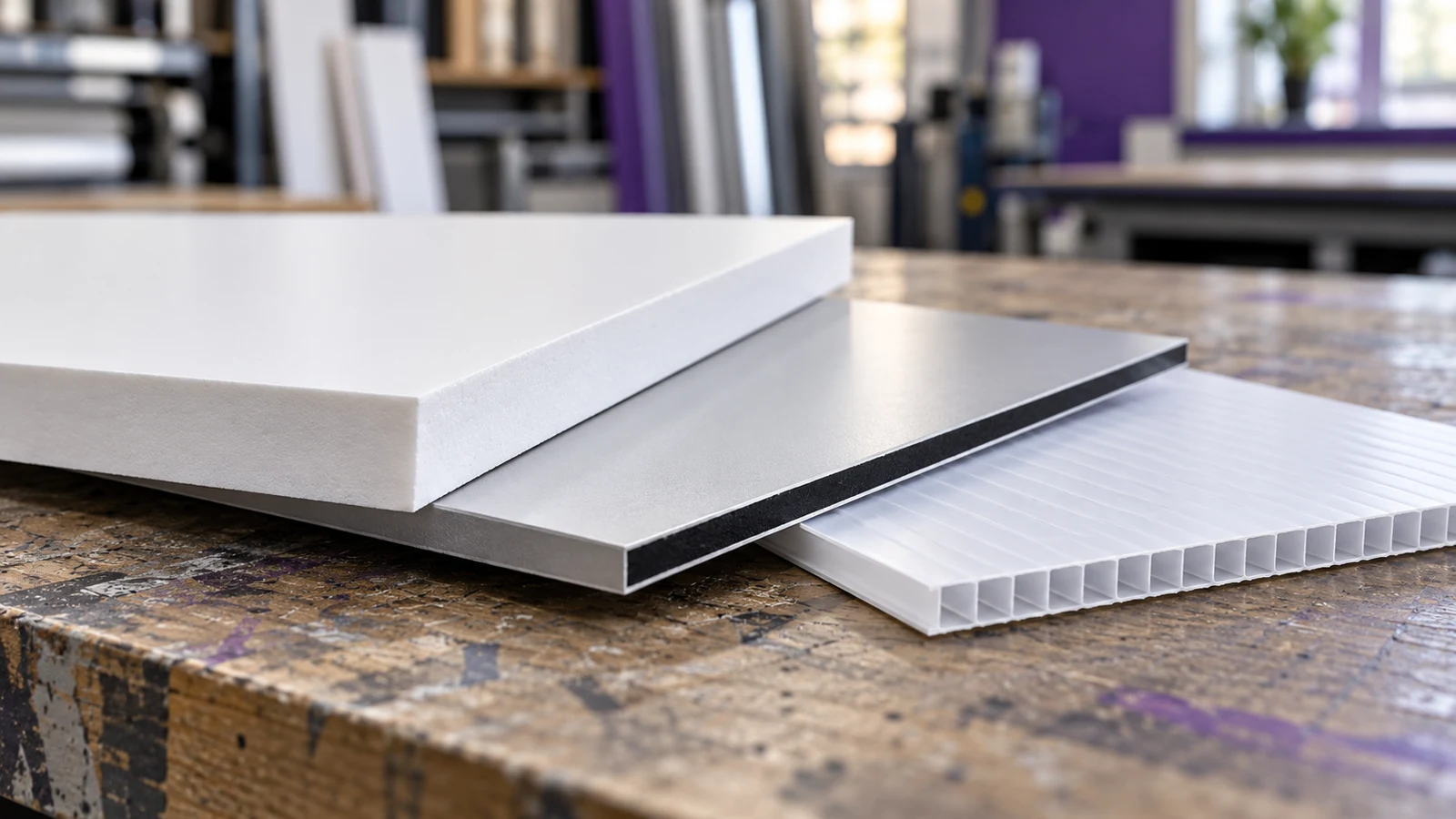
Look at a finished sign as several separate parts. There is the backing panel or frame, the print or cut lettering, any protective finish, the fixings and the surface they attach to. An illuminated installation also has electrical components. Asking how long the panel lasts does not tell you how long the colours will look fresh, or whether an existing wall is suitable for a new installation.
When comparing quotes, ask what each component actually is. A description such as outdoor board is too broad to make a useful comparison. Request the panel type and thickness, the graphic system, the intended exposure and any maintenance assumptions. You should also know whether the price includes removal of an existing sign, access equipment and making the site ready for installation.
Read durability figures in their proper context.
As a specific example, Metamark lists MD5 digital print vinyl with durability of up to seven years. That is a product reference, not a promise that every printed shop sign will look unchanged for seven years. The selected ink, protective film, application and service conditions still need to be checked for the finished job.
Metamark’s durability guide explains that its listed external figures concern unprinted vinyl in vertical Northern European exposure. It identifies climate, angle, preparation, application and maintenance as factors. A rated material life and a warranty for your completed installation should therefore be discussed separately.
Ask us to state the expected use and any applicable product warranty in the quotation. If you are assessing an existing sign, the original specification is helpful; appearance alone cannot reliably identify the vinyl or ink used. Keep invoices and specification details with photographs so that a later replacement can be planned from a clear record.
Describe where the sign will actually sit.
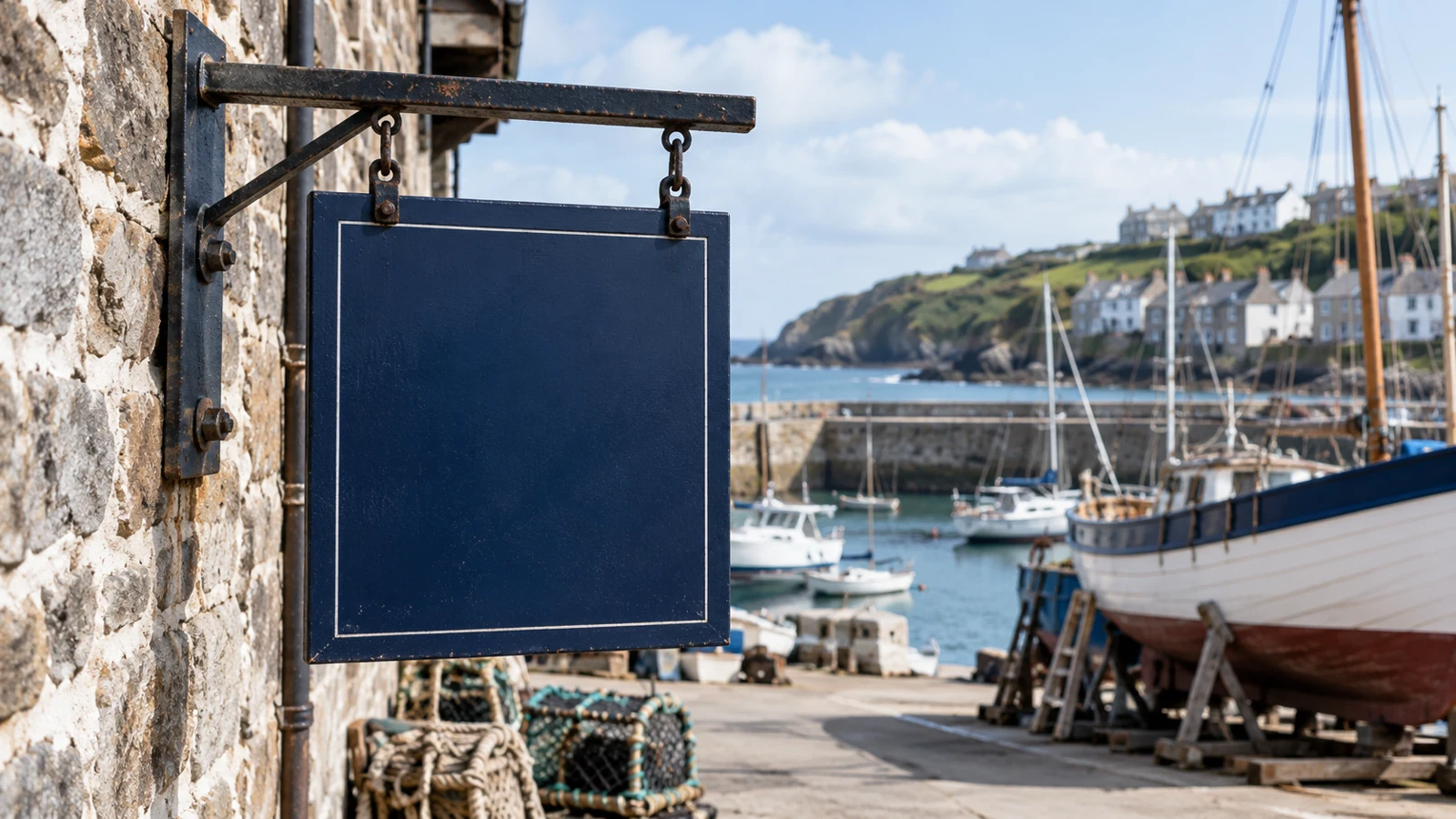
A sheltered entrance panel and an exposed frontage should not be treated as identical simply because both are outdoors. In your enquiry, say which direction the sign faces if you know it, whether it is under a canopy and whether the location is open to coastal weather. Mention any regular washdown, nearby plant, traffic spray or other unusual conditions so the specification can be reviewed against the actual setting.
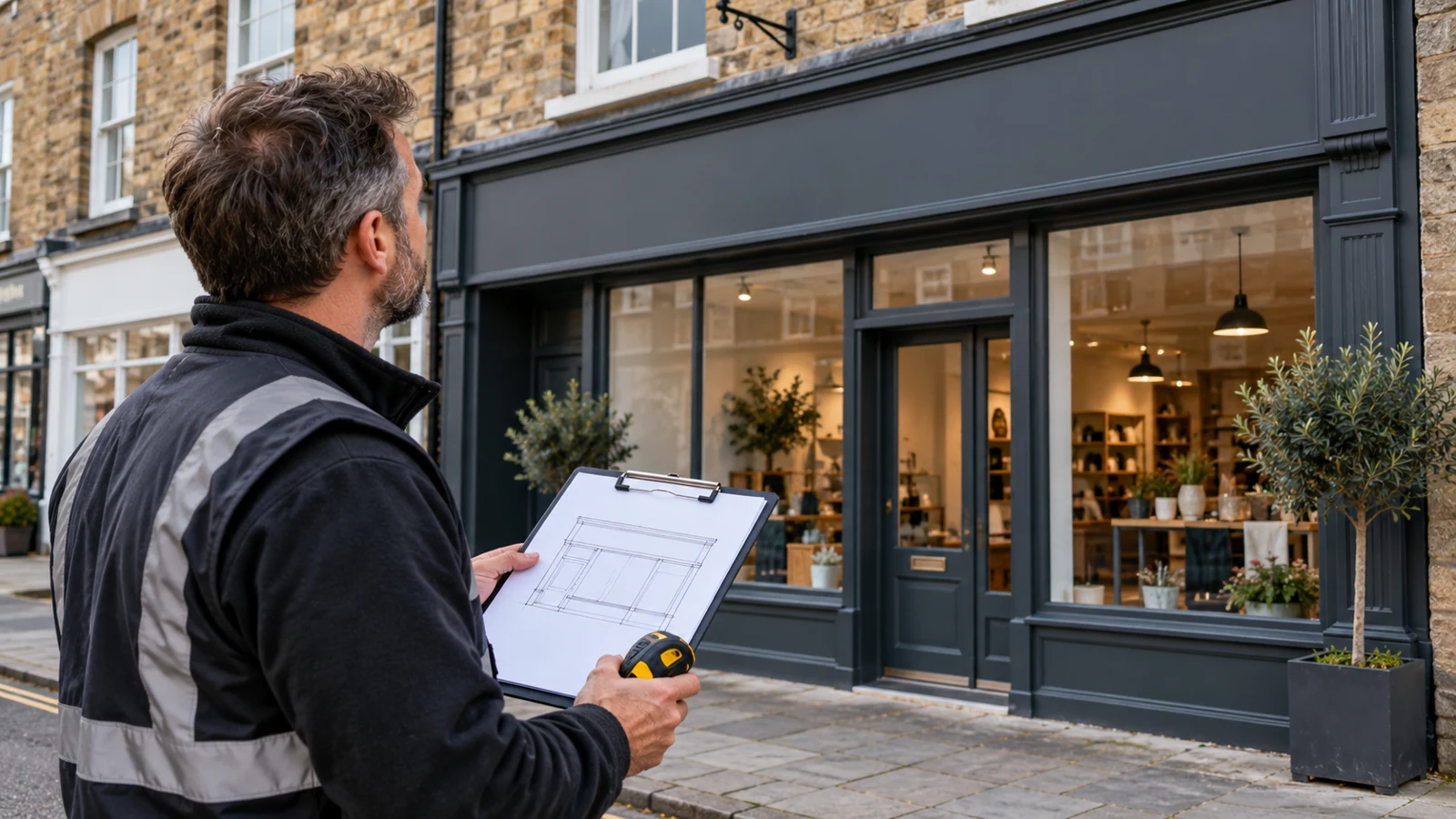
Photograph more than the sign face. A wider image can show the building, its surroundings and the proposed mounting height. Side views can reveal a canopy, projecting frame or awkward return that is invisible from the front. These details help us decide what to investigate during a survey and avoid selecting a product solely from the dimensions of the printed area.
Decide what good condition means for your business.
A sign can remain physically present while no longer presenting the business as well as you would like. Think about the standard you expect at a reception entrance, on a premium retail frontage or on a temporary site perimeter. Your replacement decision may be driven by appearance, a changed telephone number, a new tenant or an altered layout before the main panel reaches the end of its useful life.
Make long-lived artwork easier to maintain. Keep permanent information together and consider whether regularly changing prices, opening hours or seasonal messages should be on a separate replaceable element. This is a design decision worth making before production. It avoids replacing a large branded face whenever a small piece of operational information changes.
Agree an aftercare plan when the sign is supplied.
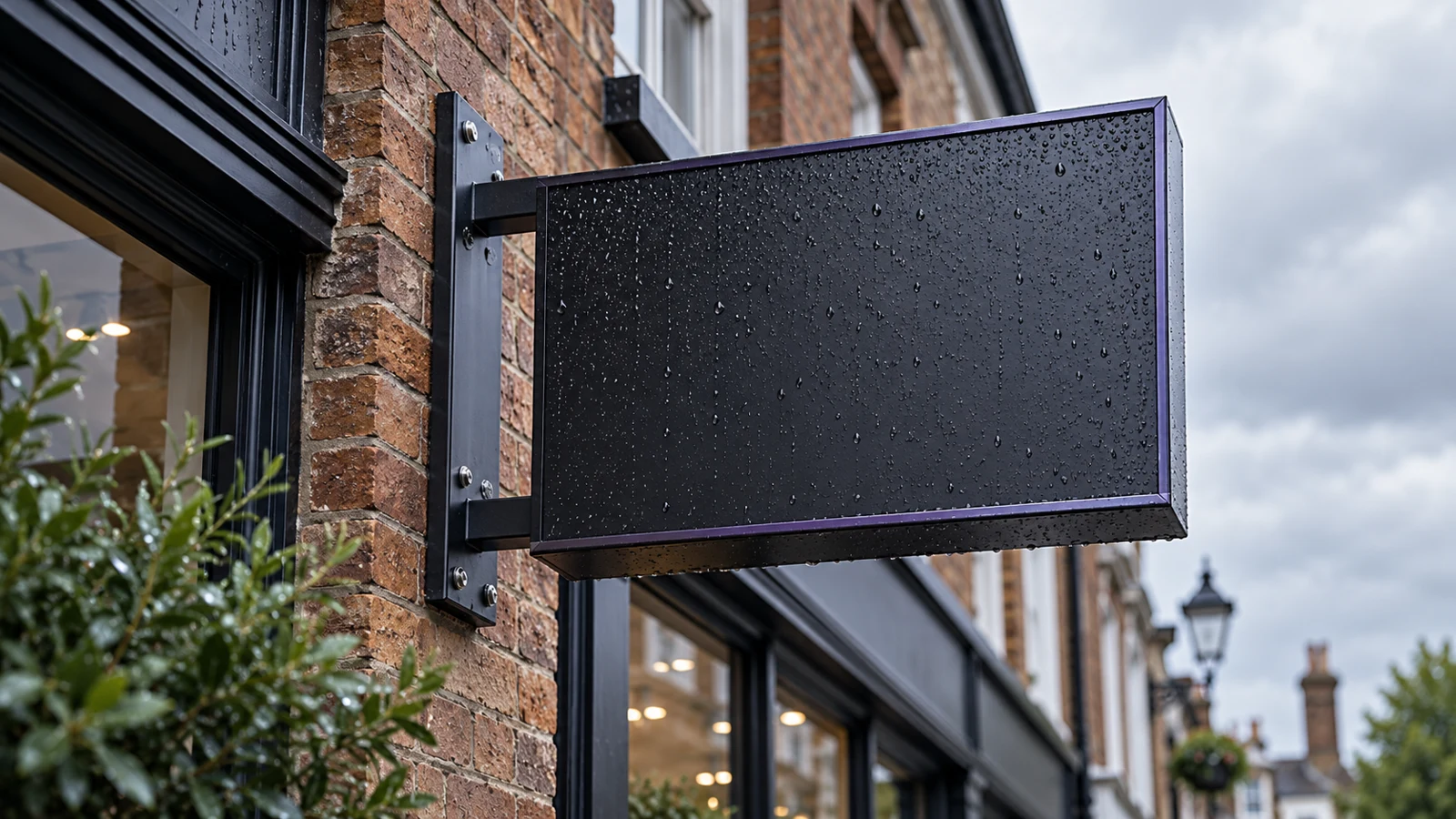
Ask for cleaning instructions appropriate to the actual panel and graphic finish. Do not assume that a product used on another part of your building is suitable for a printed sign. Record the recommended method and make it available to anyone maintaining the premises. If the installation is above comfortable ground-level reach, arrange access through a suitable professional rather than improvising a way to clean it.
Include a visual check of your signage in ordinary premises inspections. From a safe position, look for a changed appearance, lifted graphics, damaged edges or movement that was not there previously. Photograph anything concerning and contact the installer. Cleaning is not a remedy for loose fixings or a damaged mounting surface, and a sign that appears insecure needs assessment before routine cosmetic work.
Can an existing sign be refreshed instead of replaced?
Sometimes a sound existing panel or frame can be retained while the face is updated. Sometimes preparing it for reuse is less sensible than replacing it. Send clear photographs and tell us approximately when the sign was installed, what it is made from if known and whether there have been previous repairs. We can then discuss the checks required before recommending either route.
Allow for what may be hidden behind the current sign. The survey may identify old fixing holes, an uneven background or a support that needs attention. A quotation based on a photograph can be useful for initial budgeting, but it should not be mistaken for confirmation that the existing structure is suitable. Agree who is responsible for any building repairs before the fitting date.
Compare the whole cost of ownership.
The lowest purchase price is only one part of the decision. A sign that is expensive to reach deserves particular attention to future access and replacement. Ask for separate information about supply, installation and any likely refresh options. A modest increase in the initial specification may be worthwhile if it supports your intended use, but it should have a clear reason rather than being an automatic upgrade.
An illustrative example is a business planning to stay in a unit for several years while changing its promotional message each season. A permanent identity sign with a separate campaign panel creates two distinct replacement cycles. Another business taking a short lease may prefer a simpler removable installation. Neither approach is universally better: the right choice follows the premises, the message and the agreed budget.
Your project checklist.
- State how long you expect to use the premises and the message.
- Send the address, approximate size and clear front and side photographs.
- Describe shelter, exposure, coastal conditions and cleaning arrangements.
- Ask for the panel, graphic and finish specification in the quote.
- Separate expected service life from the applicable warranty terms.
- Keep the approved artwork and aftercare instructions for future updates.
Your questions. Answered.
Does a seven-year vinyl mean a seven-year guarantee for my whole sign?
No. A manufacturer’s material figure is conditional and does not by itself define cover for the finished print, panel, fixings or installation. Ask what the quotation includes and which warranty terms apply to the specified system.
Will a laminate make any print suitable for permanent outdoor use?
Do not treat lamination as a universal upgrade. The print, film and finish need to be compatible and appropriate for the proposed exposure. We can explain the selected combination when preparing the quote.
Can I keep the existing backing panel?
Potentially, subject to its condition, surface, fixings and suitability for the new graphics. Photographs are a useful starting point; a closer inspection may be required before reuse can be confirmed.
What should I send for an outdoor sign quote?
Send the location, approximate dimensions, photographs, your intended message and how long you expect to use it. Tell us about access restrictions and whether you want an existing sign removed or retained.
Sources & further reading.
Sources checked for this draft on 18 October 2026. Product ratings apply to the stated product and test conditions; confirm the current specification for your order.
Put the advice into practice.
Tell us where the sign will go, what it needs to communicate and the date you are working towards. Our Norwich team can discuss the design, materials and fitting around your project.
Visit our Norwich workshop ↗ · Find signage for your sector ↗