Start with the site, not a material name.
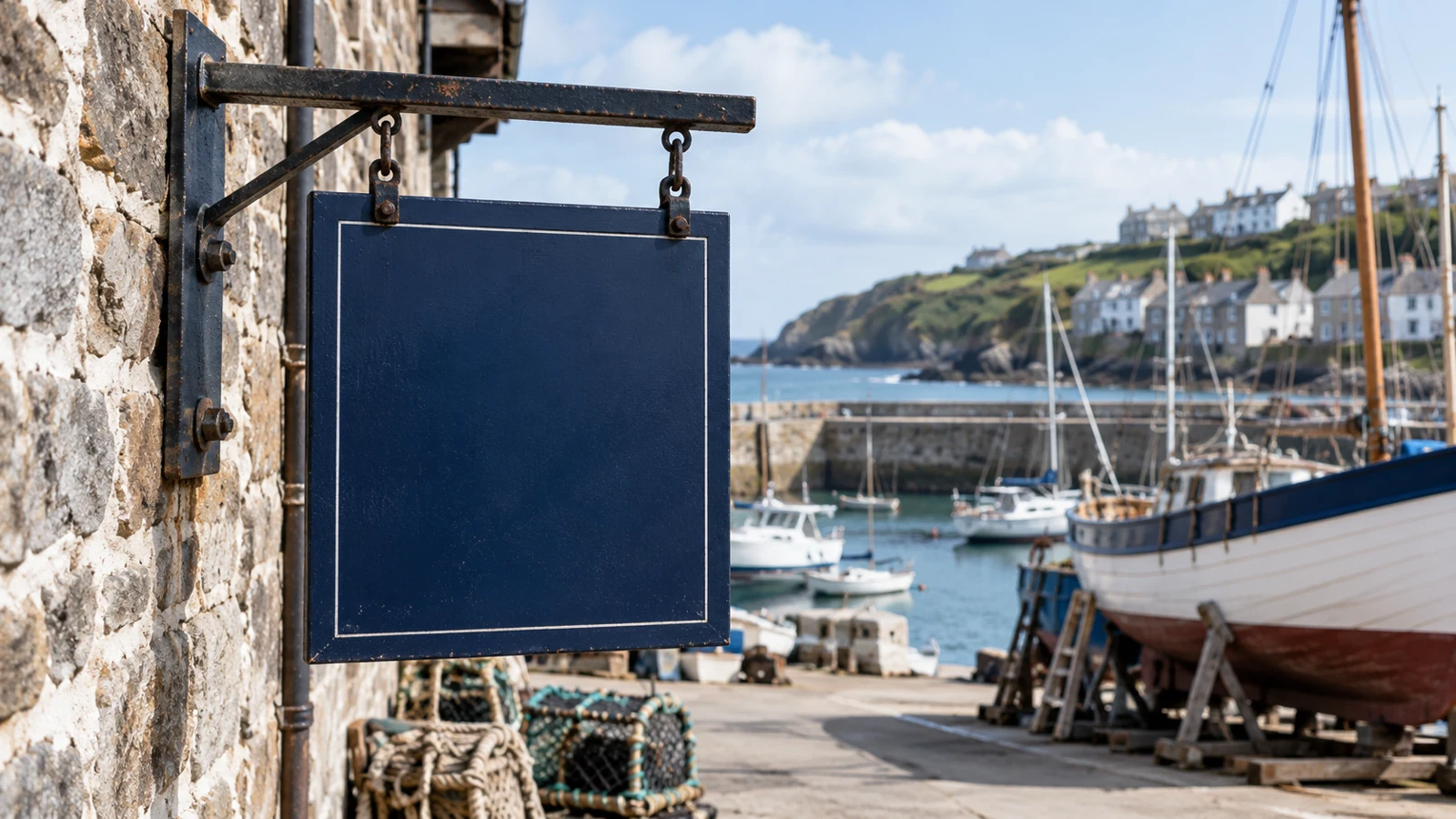
A coastal postcode is a useful warning to look more closely at the installation, but it is not a specification in itself. A shopfront set back on a sheltered street, an open holiday park entrance and a harbour-side building present different situations. Tell us exactly where the sign will go, how it will be supported and whether it needs to stay outdoors throughout the year.
For Norfolk and Suffolk businesses, photographs often explain the setting more clearly than a long description. Include a view towards the surrounding street or open area as well as a close image of the proposed position. Say if the sign is close to the sea, exposed above neighbouring buildings or frequently affected by blowing sand, spray or severe weather. These observations help guide the survey and product discussion.
Describe the signs your site needs.
An entrance sign needs to identify the business before a visitor passes the turning. A reception panel welcomes someone already on the premises. A seasonal promotion needs a clear short-term message. List these jobs separately rather than asking every panel to carry the same amount of information. The intended viewing position and the information hierarchy should be agreed alongside the material choice.
Tell us which elements are permanent and which change. On a holiday park, the business name may remain stable while offers, opening hours or facilities change. On a coastal retail frontage, the fascia may be permanent while window promotions are renewed regularly. Separating those functions makes it easier to quote the appropriate product for each part and to plan updates without replacing an entire installation.
Consider a named exterior panel specification.
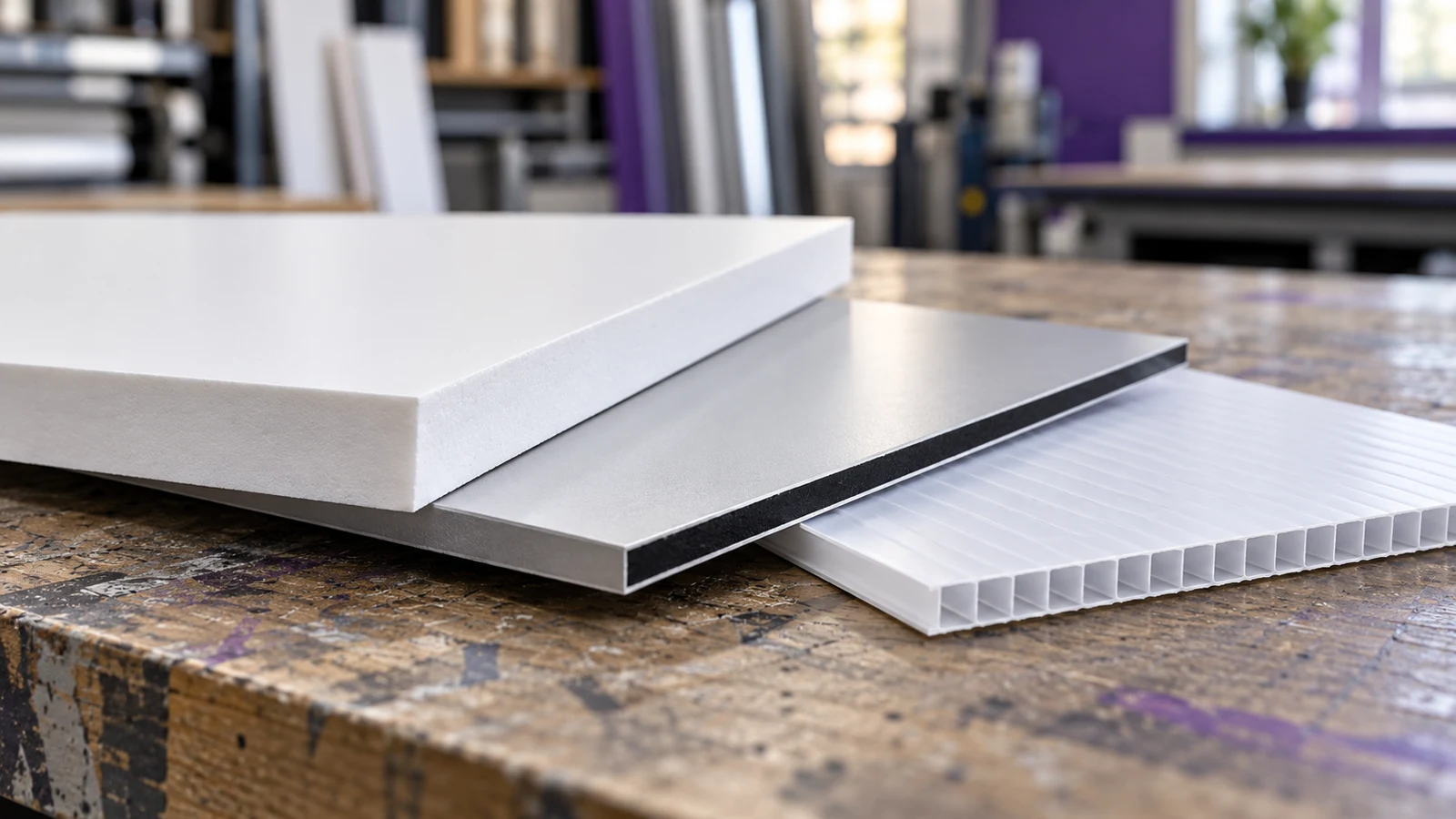
Aluminium composite is one option to discuss for a rigid exterior sign, but products sold under that description are not all interchangeable. Ask for the actual manufacturer, grade, finish and thickness proposed. 3A Composites describes DIBOND Solid Colours as suitable for interior and exterior applications and identifies corrosion-resistant aluminium cover sheets. Those product characteristics do not establish the suitability of every sign assembly for every coastal site.
Acrylic lettering, metal elements or a framed panel may be considered where the appearance calls for them. Rather than selecting a material because it sounds more premium, review a sample alongside the intended design and the installation details. A finish that looks attractive on a small sample still needs to work at the proposed size, viewing distance and mounting position.
Treat fixings and supports as part of the sign.
A durable face is only one part of an exterior installation. Ask the supplier to assess the support, fixing arrangement and compatibility of the components for the site. This is especially important when replacing a sign on an existing framework. A previous installation remaining in place is not evidence that the same supports will suit a different panel size, weight or shape.
Do not specify fixing quantities or substitute hardware from a generic shopping list. The installation needs to be assessed as a whole, including the substrate behind the sign. Let us know about a landlord’s requirements, an existing maintenance report or previous damage. These details can identify questions that should be resolved before manufacture, rather than leaving the fitting team to discover them on arrival.
Do not assume a material choice solves wind exposure.
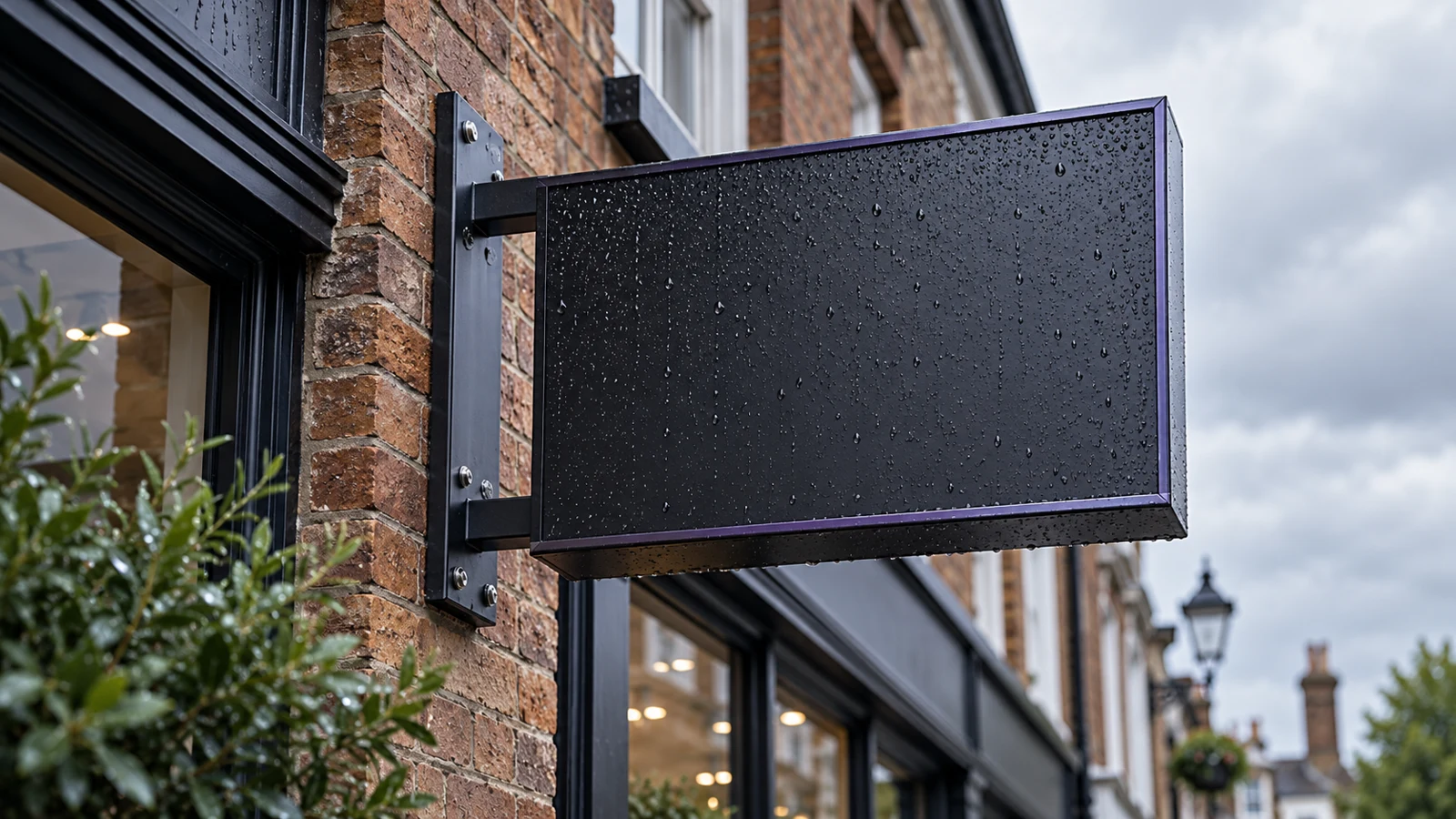
For an exposed position, the size, shape, support and mounting arrangement all deserve attention. A large panel on posts, a projecting sign and a face fixed against a building are different proposals. The person specifying the installation should establish what design assessment is necessary. This guide does not provide wind-load calculations or a universal fixing pattern for coastal signage.
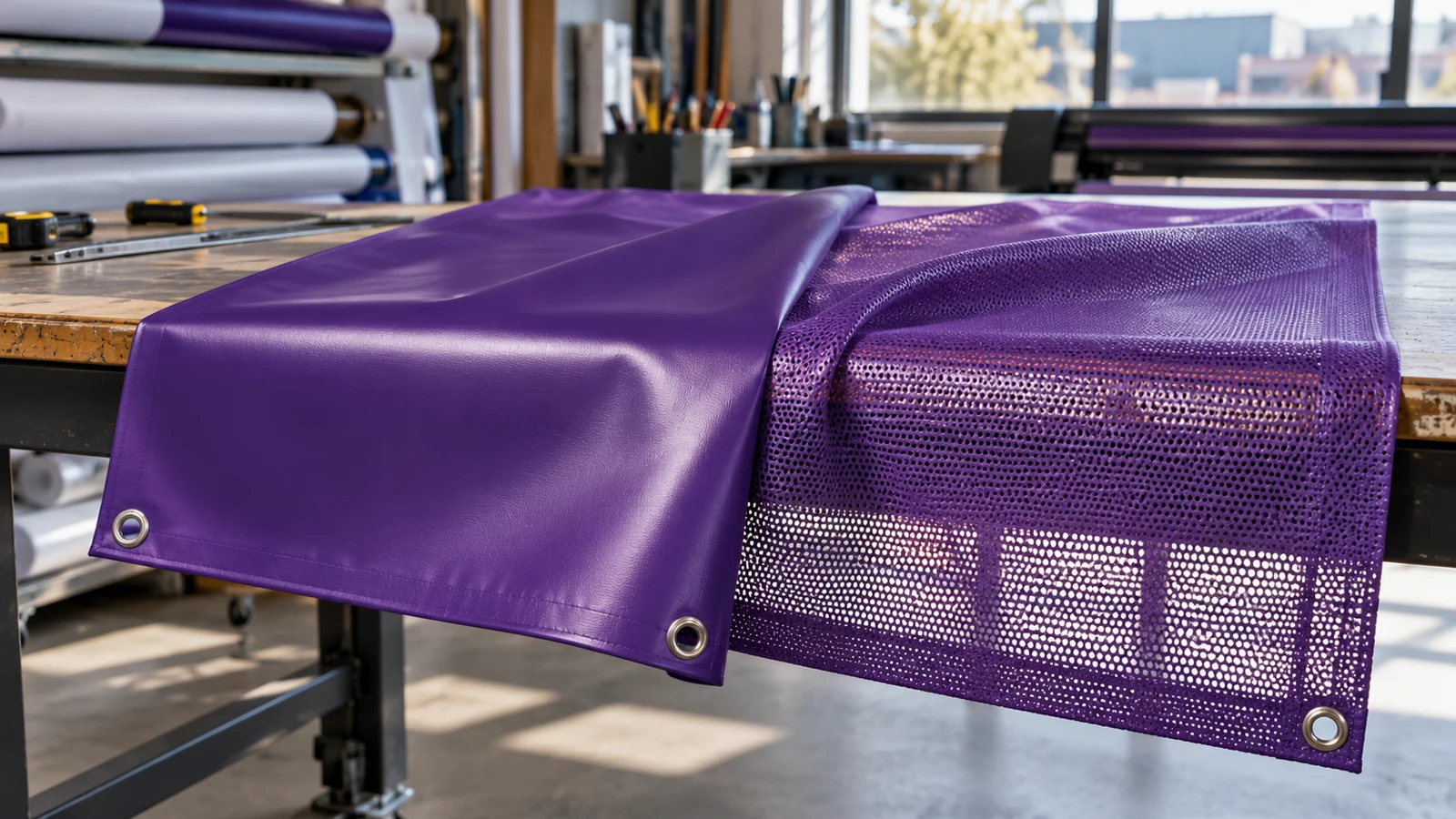
The same principle applies to banners and portable signs. Choosing mesh instead of solid banner material does not prove that a fence, frame or fixing arrangement is adequate. A portable display should be used within its particular product instructions and operating limits. Tell us if the display needs to be brought indoors, stored between events or moved by one member of staff, so practicality is considered from the outset.
Match the graphics to the exposure and refresh cycle.
Choose the graphic system with the panel, rather than treating printing as an unrelated final step. Ask which vinyl or print finish is proposed and whether it is intended for the site conditions. Metamark’s durability guidance shows why exposure and installation conditions matter when interpreting a headline material rating. A number of years quoted for a raw film is not a coastal-life guarantee for a finished sign.
For a seasonal business, consider whether graphics should be renewed independently of the main support. Keeping dates, prices and special offers out of the permanent identity panel may simplify future changes. Ask about replacing a single panel if it is damaged and keep the approved artwork together with the material details. That makes a matching replacement easier to discuss later.
Make maintenance realistic for the premises.
Before choosing a complex installation, think about who will maintain it and how it will be reached. A sign that requires specialist access for every inspection or refresh has different practical implications from one reachable from ground level. Ask for aftercare instructions for the actual materials supplied and discuss whether a planned inspection arrangement is appropriate for the site.
Keep a simple record of the installation date, photographs and any concerns noticed during ordinary premises checks. If a panel moves unexpectedly, a fixing appears damaged or a part has come loose, arrange an assessment. Do not try to solve an installation issue by covering it with new vinyl or adding improvised fixings. Cosmetic refresh work and structural maintenance are separate decisions.
Three useful ways to plan a coastal signage project.
For an illustrative seafront café, begin with a permanent business identity, a clearly located entrance message and separate menus that can be updated. Discuss the fascia as a surveyed installation, then look at how the operational information will change. This keeps the design focused and helps distinguish the cost of the enduring frontage from the cost of regular promotional updates.
For an illustrative holiday park, map the visitor journey from the road to reception and onward to the relevant facilities. Use that plan to identify the required signs before selecting materials. For a harbour-side workshop, start with the building identification, customer entrance and delivery instructions. These examples are planning approaches, not records of completed Broadland projects or specifications ready for manufacture.
Ask for a quote that explains the choices.
A useful quotation should identify what is being supplied, why the proposed system suits the brief and what still depends on survey. Include the panel or lettering specification, graphics, installation scope and any access requirements. Ask how the sign could be refreshed or repaired later. Where there are alternative options, compare them against the same intended use rather than looking only at the total.
Send Broadland Digital the address, approximate dimensions, photographs and a short description of the business. Add the planned installation date and any times when the site is difficult to access. We can use that information to discuss a suitable starting point and identify which details need confirmation before a final specification is agreed.
Your project checklist.
- Photograph the sign position and the wider surroundings.
- Describe direct exposure, shelter and seasonal use.
- Separate permanent branding from changing information.
- Request a named panel, graphics and fixing specification.
- Have existing supports and the mounting surface assessed.
- Agree aftercare, inspection and future replacement access.
Your questions. Answered.
Is aluminium composite automatically suitable by the sea?
No material name establishes suitability on its own. The actual product, finish, graphics, supports and installation need to be assessed for the site. Ask for the proposed specification and any relevant limitations.
Does mesh make a coastal banner safe in strong winds?
Mesh is not a substitute for assessing the support and fixing arrangement. The complete installation and the supplier’s product limits must be considered; a generic banner recommendation cannot determine safe use at a particular site.
Can I reuse the posts from an old sign?
That needs an assessment of the existing posts, foundations and fixings against the new proposal. Supply photographs and any available installation records, but do not assume that previous use proves suitability.
Should seasonal signs be stored indoors?
Discuss storage and operation for the particular product. If it is designed to be taken down, keep its instructions and packaging and agree a practical routine with the staff who will handle it.
Sources & further reading.
Sources checked for this draft on 18 October 2026. Product ratings apply to the stated product and test conditions; confirm the current specification for your order.
Put the advice into practice.
Tell us where the sign will go, what it needs to communicate and the date you are working towards. Our Norwich team can discuss the design, materials and fitting around your project.
Visit our Norwich workshop ↗ · Find signage for your sector ↗